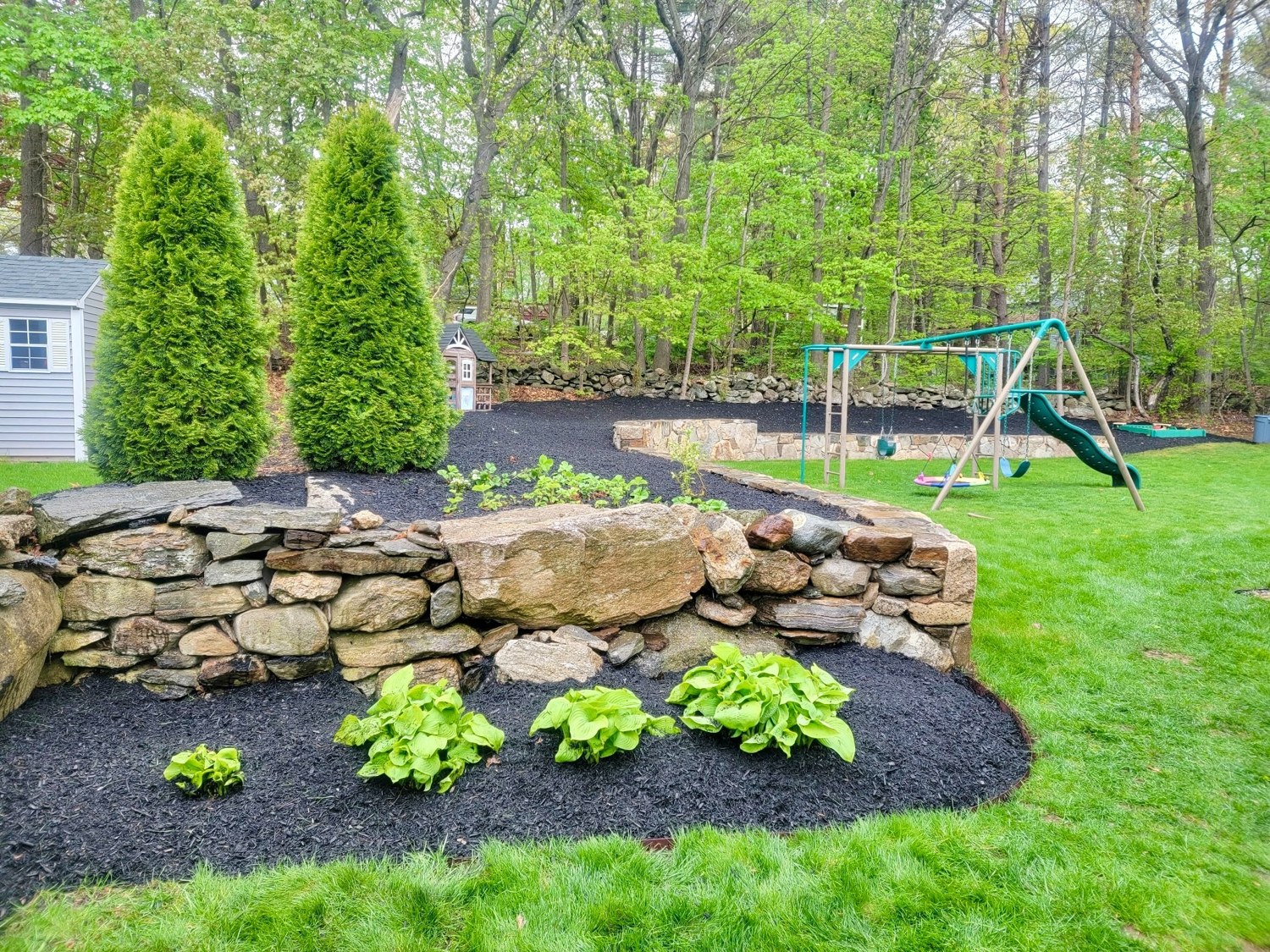
If you’ve ever spent a weekend pulling weeds only to see them come back a week later, you’re not alone. Weed control is one of the most frustrating parts of maintaining a yard in Massachusetts and Rhode Island.
The good news is that mulch is one of the simplest and most effective ways to reduce weeds and keep your landscape looking clean with less effort.
Quick Summary
- Mulch blocks sunlight, preventing most weeds from growing
- A proper 2-inch layer is key for effective weed control
- Mulch reduces the need for constant pulling and maintenance
- It works best when combined with proper bed preparation
- Annual refreshing keeps weeds from coming back
Why Weeds Keep Coming Back
Weeds are persistent because their seeds are already in the soil, waiting for the right conditions to grow. When soil is exposed to sunlight and moisture, those seeds quickly sprout and spread.
Bare or thin landscape beds are especially vulnerable. Once weeds take hold, they compete with your plants for water and nutrients, making your entire landscape harder to maintain.
How Mulch Stops Weeds from Growing
Mulch works by creating a protective barrier over the soil. When applied correctly, it blocks sunlight from reaching weed seeds, preventing them from germinating.
Without sunlight, most weeds simply cannot grow. This dramatically reduces the number of weeds that appear in your planting beds throughout the season.
Mulch also helps regulate soil moisture, which further limits the conditions weeds need to thrive.
The Importance of Proper Mulch Depth
For mulch to effectively control weeds, depth matters.
A layer that is too thin will allow sunlight through, giving weeds a chance to grow. On the other hand, mulch that is too thick can create problems for your plants.
The ideal depth for most residential properties is about 2 inches.
👉 If you’re unsure what that looks like, review our guide on proper mulch depth to avoid common mistakes.
Why Preparation Matters
Mulch alone will not eliminate existing weeds. If weeds are already growing, they need to be removed before mulch is applied.
Proper preparation includes removing weeds, loosening the soil, and defining clean edges so mulch can be applied evenly and effectively.
If your beds already have old mulch, it’s important to evaluate whether it should be removed first.
👉 Read our guide on whether to remove old mulch or just add new before refreshing your beds.
Starting with a clean surface allows mulch to do its job properly from the beginning.
How Often Should You Refresh Mulch?
Over time, mulch naturally breaks down and thins out. As this happens, its ability to block sunlight decreases, allowing weeds to return.
That’s why most homeowners in Massachusetts and Rhode Island refresh their mulch once per year, typically in the spring. Keeping the depth consistent is one of the easiest ways to reduce weed growth long term.
Does Mulch Eliminate Weeds Completely?
Mulch significantly reduces weeds, but it will not eliminate them entirely. Some weeds can still grow from airborne seeds or push through thinner areas.
However, when mulch is applied correctly and maintained each season, it can dramatically reduce the amount of time you spend dealing with weeds.
A Better-Looking, Lower-Maintenance Yard
In addition to controlling weeds, mulch gives your landscape a clean, finished appearance. Defined beds with fresh mulch instantly improve curb appeal and make your entire property look more maintained.
Final Thoughts
If you’re tired of constantly pulling weeds, mulch is one of the most effective solutions available. By blocking sunlight, maintaining proper depth, and refreshing annually, you can dramatically reduce weed growth and make your yard easier to manage.
When done correctly, mulch not only improves the look of your property but also saves you time and effort throughout the season.